When winter actually feels like winter in Camden County the cold can chill you to the bone, and a space heater can be just enough to thaw you out. Before you plug it in and crank it to full blast it's important to know the risks and how to limit them.
According to the National Fire Protection Association (NFPA) and the U.S. Consumer Product Safety Commission (CPSC), space heaters and heating stoves cause nearly half of home heating fires and are linked to about 1,600 fires, 70 deaths, and 160 injuries each year.
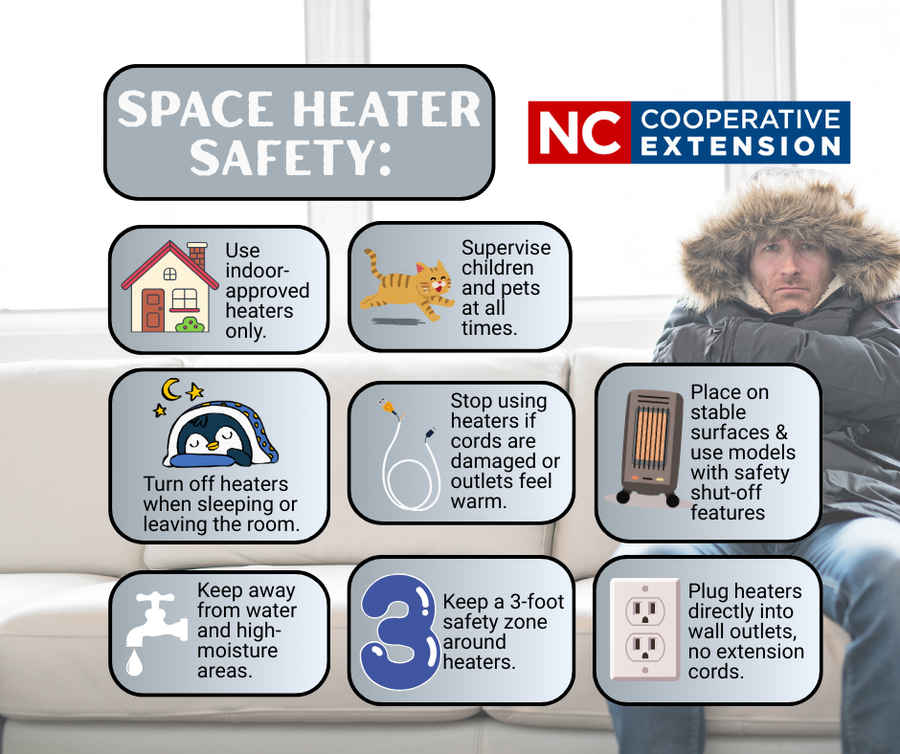
How to Limit the Risk of Fire:- Give Them Space: Keep everything flammable at least 3 feet away from the heater. That means not wrapping yourself in your favorite blanket “burrito style” and sitting too close.
- Plug Directly Into the Wall: Avoid extension cords and power strips. Space heaters draw a lot of power, and direct wall outlets help prevent overloads and electrical fires.
- Watch Where You Set Them: Place heaters on flat, stable surfaces, no wobbly tables, or soft couches. It's also best to choose models with tip-over shut-off and auto shut-off features.
- Know When to Turn Them Off: Turn off heaters when you’re sleeping or leaving the room, and stop using any unit with frayed cords or that cause your outlets to get warm.
- Keep Them Dry: Don’t put heaters near sinks, bathtubs, or other water sources, as moisture and electricity don’t mix.
- Supervise Kids & Pets: Whether you have a cat that decides the heater is their new cozy bed, or a child who thinks their toys belong in a volcano, space heaters can easily be tipped over or have items placed too close.
These simple precautions can help protect your home and family, while still keeping everyone warm and comfortable.
Sources:
National Fire Protection Association (NFPA) – Home Heating Safety
U.S. Consumer Product Safety Commission (CPSC) – Space Heater Safety
Centers for Disease Control and Prevention (CDC) – Carbon Monoxide & Winter Safety
U.S. Fire Administration (USFA) – Home Heating Fire Prevention